Joe Venuti’s incredible jazz violin method book. Venuti was the first jazz violin virutoso who influenced all who came after him, most notably Stephane Grappelli. Includes transcriptions of his solos for I’ve Found a New Baby, Tiger Rag, Whispering, and many more. 100s of exercises and hot licks. 98 pages – In English, French, and Spanish.
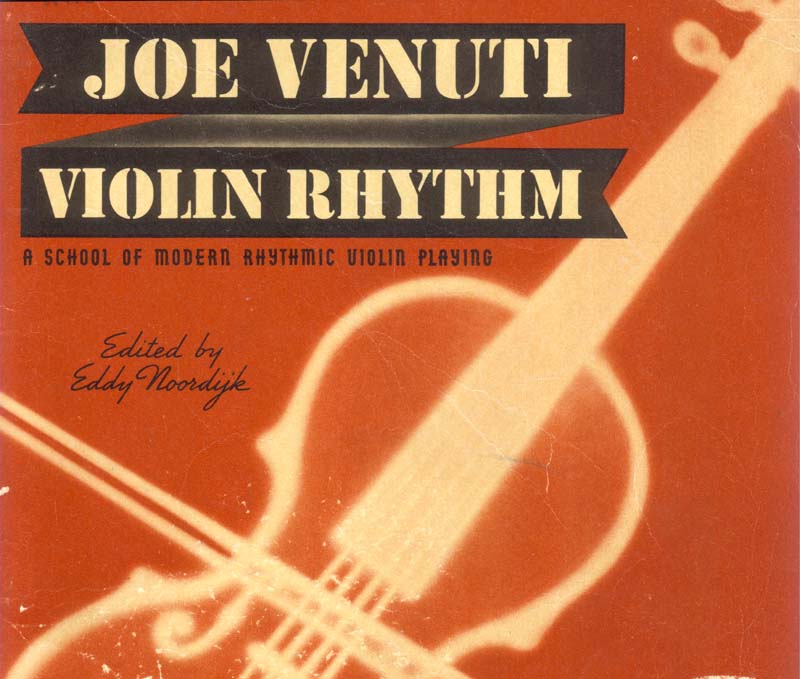
Table of Contents
For more info or to buy: Click Here
Posted by Michael Horowitz on May 4, 2004 at 1:39 pm in News.Comment on this post.
DjangoBooks.com now offers downloadable eBooks in PDF format. Our first release is the The Bickford Mandolin Methodby Zarh Myron Bickford (89 pages with numerous illustrations and musical examples).
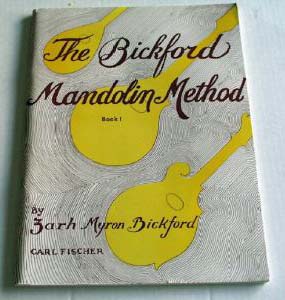
Table of Contents
I stumbled across this book while doing research on the right hand picking styles of pre-war guitarists, banjo players, and mandolinists. I had always suspected that the Gypsy Picking technique was employed by most plectrum players before WWII. Bickford’s instruction clearly describes the same picking technique that Django and most other Gypsies use on the guitar. The use of predominately down strokes, all played as rest strokes, was the preferred technique of early 20th century mandolin virtuosos. And judging by the incredible playing of Dave Apollon, who I assumed used this same technique, its just as effective on mandolin as it is on guitar.
Although the book covers numerous topics, he consistently returns to the importance of right hand technique. Most of the examples have pick stroke indications included. He also explains numerous special picking techniques.
Bickford’s book is also an excellent way to improve all around musicianship. He takes you from the basics of reading music to some very advanced mandolin duets and solo pieces. You’ll also learn numerous scales and chords. For those of you without an accompanist, he has some very nice chord-melody solos written out.
I think mandolinists of any skill level will find this book beneficial. For mandolinists attempting to play Gypsy jazz, this is the closest thing you’ll get to Gypsy Picking for mandolin. Learning the Gypsy picking technique as described by Bickford will help you get the right tone and attack for this music.
For more info or to buy: Click Here
Posted by Michael Horowitz on May 4, 2004 at 1:34 am in News.Comment on this post.
Occasionaly over the years I’ve seen Django’s famous composition Nuages listed as It’s the Bluest Kind of Blues. Often a lyric credit is also attributed to Spencer Williams. I finally did a little research and unearthed the following version of Nuages aka It’s the Bluest Kind of Blues. It was printed by Peter Maurice Music Co. in 1946. I suppose it’s possible Django might have actually collaborated with Williams in person during his tour of the U.S. that year.
It’s the Bluest Kind of Blues
I read through the introduction or “verse.” It’s nice, it could be used as an instrumental introduction for a more conventional Gypsy version of the song. The part we recognize as Nuages begins on the second page were it is marked “Chorus.”
Incidentally, many of the standards from this era have a “verse” which was part of the original show the song was from. They are largely forgotten now. However, its often worth doing some research to find out what they are. You’d be surprised how many introductions are based on the original verse. For example, check out Django’s 1953 version of Night and Day.
It’s the Bluest Kind of Blues was recorded by a number of famous American jazz singers. The most famous was probably Peggy Lee. Here’s a clip of her singing it.
Peggy Lee: It’s the Bluest Kind of Blues
Here’s another version by Monica Lewis.
Monica Lewis: It’s the Bluest Kind of Blues
And finally a contemporary version by Mike Ferre.
Mike Ferro: It’s the Bluest Kind of Blues
Enjoy! -Michael
Posted by Michael Horowitz on April 30, 2004 at 11:49 pm in Free Lessons.Comment on this post.
Gryphon Gazet – Spring 2004 – by Richard Johnston
Pearl Django Play-Along Songbook, Vol. 1, by Greg Ruby. Spiral bound, includes CD, $38. It’s no secret that the key to playing gypsy jazz solos, as with most instrumental music, lies in having a solid rhythm section that doesn’t mind playing the same chord changes over and over again. Here you get instruction, transcriptions of solos (both standard and tab), and complete chord charts for 17 Django, or Django-style, songs, plus the advantage of being able to practice those great melodies with one of North America’s best gypsy jazz bands playing back-up. Now you’ll be able to take your turn the next time a jam session digs deep into Djangology, Limehouse Blues, Nuages, or Swing 42.
Posted by Michael Horowitz on April 22, 2004 at 11:10 am in Book Reviews.Comment on this post.
Sometime in June of 1950 Django recorded a nearly fifteen minute long unaccompanied guitar version of Belleville and Nuages. I transcribed the Nuages section of the performance for my book Unaccompanied Django. I split it into three pieces, Theme I (Nuages Intro), Nuages, and Theme II (Nuages Outro).
This performance is available on the CD Integrale Django Vol.19 (1950-1952) Troublant Bolero.
Only the Nuages section is included. Enjoy – Michael.
Nuages MP3
Posted by Michael Horowitz on April 16, 2004 at 7:11 am in Audio.Comment on this post.