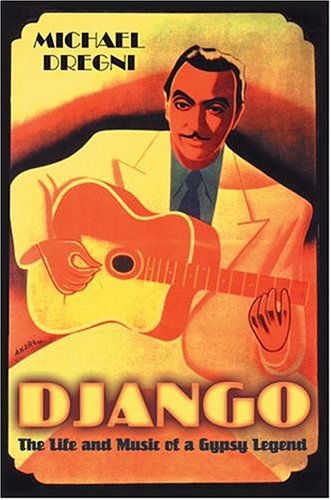
Django’s first son was Henri “Lousson” Baumgartner (1928-1992). Like Babik, Django’s second and more famous son, Lousson was an excellent guitarist. Since Lousson was older he actually played with his father on occasion and even accompanied him on numerous recordings in the 1940s. Like many of the second generation players, Lousson played more contemporary styles of jazz on an archtop electric guitar. Despite Lousson’s modern bebop approach, his Gypsy heritage is evident in his technique, repertoire, and sense of aesthetics. The following home recording of Lousson playing Django’s bebop style tune Nuits de Saint-Germain-des-Pres demonstrates his largely unsung talent. Lousson never recorded commercially.
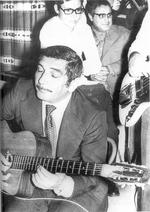
This recording made during a rehearsal sometime in the 60s. Please excuse the poor quality. There are numerous drop outs through out.
MP3: Nuits de Saint-Germain-des-Pres
Posted by Michael Horowitz on November 3, 2004 at 1:34 pm in Audio.Comment on this post.
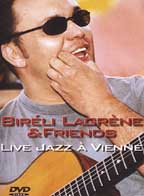
The career of Bireli Lagrene began at the tender age of 11, when he completed an astonishing album called “Routes to Django.” This record saw the young guitarist interpreting the songs of the legendary Django Reinhardt. Subsequent releases allowed him to carve out his own niche in the music world, while still tipping his hat to Reinhardt by incorporating many similar techniques into his playing style. This release features Lagrenes “Gipsy Project” in full swing at the Vienne Jazz Festival in France, where an expectant crowd gathers to bask in the glory of his exquisite tunes. Special guests come thick and fast throughout, with Richard Galliano, Dorado Schmitt, and Django Reinhardts grandson, David Reinhardt, all adding to the occasion.
For more info or to buy: Click Here
Posted by Michael Horowitz on November 3, 2004 at 9:46 am in News.Comment on this post.
1985 Sunburst Anniversary Edition Johnny Smith. Pristine condition. Bought directly from Johnny Smith at his music store in Colorado. Signed and setup by Johnny himself! Johnny routinely sent back guitars that didn’t meet his standards. So this guitar passed the ultimate quality control test: inspection by Johnny Smith himself! Probably the most collectable Johnny Smith ever….
I’m the second owner. This guitar has very little wear. One minor ding in the top and that’s it. Label on the inside reads “Checked and adjusted for Dave Fagre on 7-29-86 [signed] Johnny Smith”
The Johnny Smith model is now sold by Gibson under the name Le Grande. The Le Grande sells for over $10,000, why pay that much when you can get the same guitar for less?
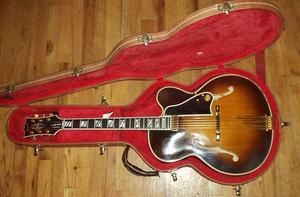
Buy Now!
(more…)
Posted by Michael Horowitz on November 1, 2004 at 12:17 pm in Guitars.Comment on this post.
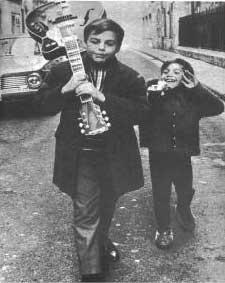
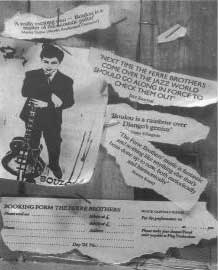
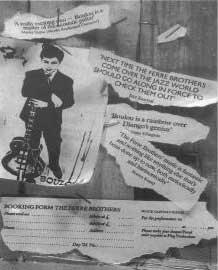
Boulou Ferre is simultaneously the most authentic and eclectic guitarist playing within the Gypsy jazz genre today. Authentic because he grew up within the epicenter of the tradition: He’s half Gypsy, his father was Matelo Ferret, he was born and raised in Paris, and he was schooled in the traditional Gypsy guitar technique and music from an early age. Eclectic because he mastered bebop before his teens, studied classical guitar at a conservatory, and has come to embrace musical influences as diverse as Lenny Tristano, Bach, and Arnold Schoenberg. Boulou has it all. Deep, deep roots in a traditional from of music as well as full understanding of the most complex forms of art music.
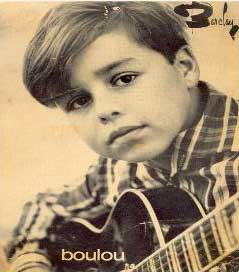
For those interested in studying Boulou’s style, see my Unaccompanied Django Book. Gypsy Etude #2 is a transcription of Boulou’s Baroque style exploration of Django’s Improvisation #3
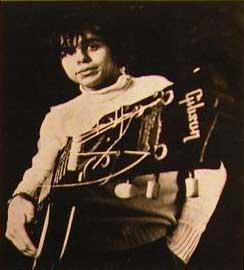
Those of us lucky to see Boulou’s performances at the Djangofest NW witnessed just how powerful this man’s music is. These performances surely have earned him new found respect among guitarists in North America. For those of you looking for more of Boulou’s music you’ll find that there are about half a dozen commercial recordings available from the late 1970s on. My personal favorites are: Gypsy Dreams and Pour Django. However, Boulou’s recording career began much earlier when he was a child. The following recording was made sometime in the 1960s when Boulou was a child. Notice his impressive command of bebop vocabulary, his ability to sing everything he plays, and complete lack of Django influences.
MP3: Bluesette
Posted by Michael Horowitz on October 23, 2004 at 10:14 am in Audio.Comment on this post.
Posted by Michael Horowitz on October 22, 2004 at 11:14 am in News.Comment on this post.