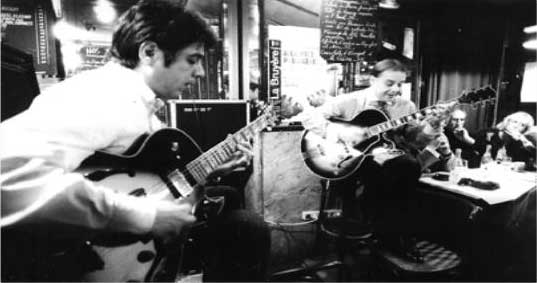
Harry F. Reser is considered one of the best tenor banjo players of all time. This thorough method book was designed to train professional banjo players. It focuses primarily on scales and also includes a section on lead “breaks.” The picking is notated on most examples. Additionally, he includes a detailed section on the strumming patterns used by professional banjo players of the time (i.e. Fox Trot, Oriental, Blues, Latin and Tango, Arpeggio Stroke, Syncopation, etc.) 93 pages with over a hundred examples.
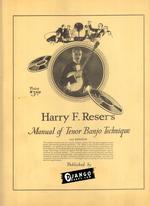
Table of Contents
For more info or to buy: Click Here
Posted by Michael Horowitz on June 27, 2004 at 12:07 am in News.Comment on this post.
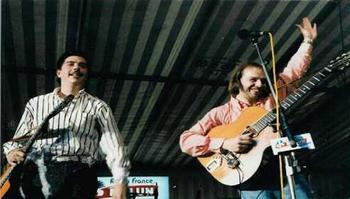
Boulou and Elios Ferre carry on the traditions of the great Ferret musical dynasty (later changed to Ferre). Their father was Matelo Ferret, who was one of Django’s rhythm guitarists. Matelo later forged a career of his own and is most remembered for his recording Tziganskia. Additionally, Matelo’s brothers Sarane and Baro were also to be found accompanying Django or leading their own ensembles. As Boulou once said, “Django was the pope and the Ferret’s were the bishops.”
Both Boulou and Elios showed immense talent at an early age. On bootleg recordings of Boulou made when he was around 12, one can hear him playing (and singing in unison) wonderful improvisations which include vocabulary from both Django and Charlie Parker. Boulou and Elios developed their musical skills in tandem, and eventually evolved into one of the most expressive and technically impressive guitar duets. They often perform without a bass, and cover musical ground ranging from Musette waltzes, Django compositions, bebop, avant-garde classical, Romanian folk music, and much more.
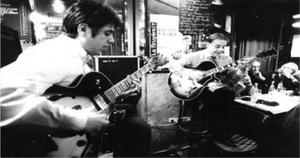
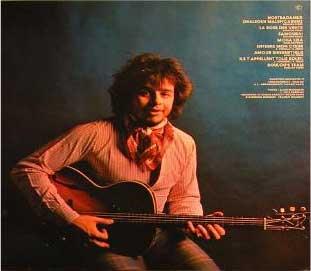
For those of you looking for more of Boulou’s music you’ll find that there are about half a dozen commercial recordings available from the late 1970s on. My personal favorites are: Gypsy Dreams and Pour Django.
This audio clip was recorded at a wedding in 1974. They are playing the famous waltz Montagne Sainte-Genevieve (usually attributed to Django.) It then segue ways into an Eastern European folk tune. The fast tempo, hard attack, and complex arrangement are characteristic of the Ferre sound. Enjoy! -Michael
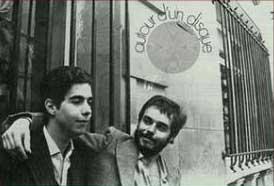
From the collections of Ted Gottsegen and Scot Wise.
MP3: Montagne Sainte-Genevieve
Posted by Michael Horowitz on June 15, 2004 at 9:33 am in Audio.Comment on this post.
Charles McNeil was one of the top tenor banjo players of the swing era. This fascinating book documents many of the techniques used by professional jazz banjo accompanists. It focuses primarily on chords, organized into his system of chord families (chords are written with both standard notation and fret board diagrams). He gives precise instruction on right hand picking technique, which is nearly identical to the style of picking used by Django (see Gypsy Picking). McNeil also discusses how to create banjo parts from scores for piano or 2nd violin. Additionally, he includes 22 lead breaks and a fascinating section on the strumming patterns used by professional banjo players of the time (i.e. Shimmy stroke, New York stroke, Whine stroke, Chicago stroke, patter stroke, etc.) Many of these strokes are reminiscent of some Django’s accent patterns (Django started his career on the guitar banjo.) 100 pages with pictures, diagrams, and over a two hundred examples.
Mandolinists looking to expand their jazz chord vocabularly might also benifit from the chord diagrams and strumming patterns in this book. (The tenor banjo is tuned a 4th down from the mandolin CGDA).
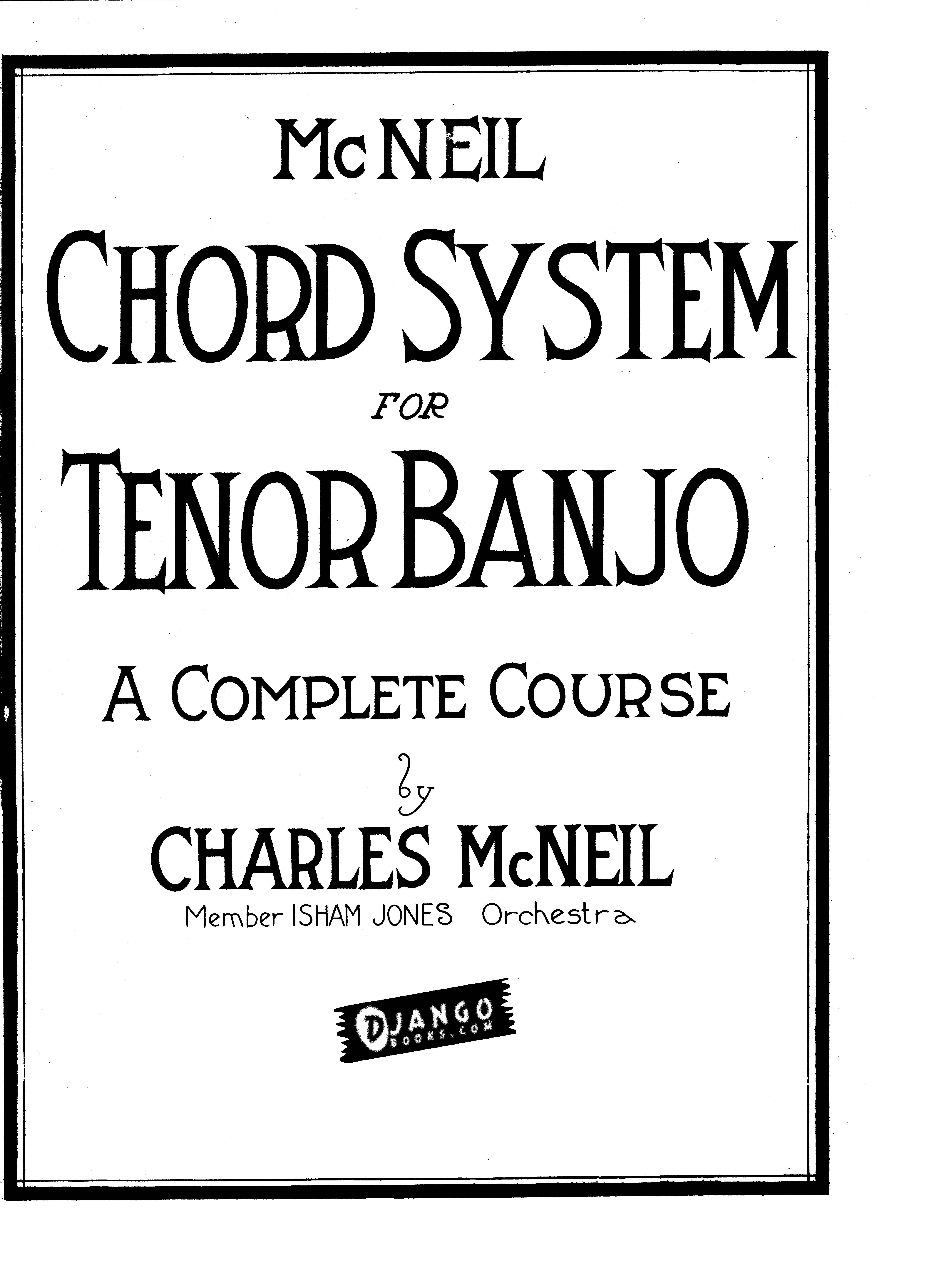
Table of Contents
For more info or to buy: Click Here
Posted by Michael Horowitz on June 1, 2004 at 8:23 pm in News.Comment on this post.
The first release by the Gypsy guitar virtuoso Paulus Schafer. Hear this young Gypsy talent burn through a mix of Gypsy and contemporary standards.
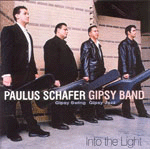
Paulus is one of the top young Gypsy talents in The Netherlands. He grew up in the same camp as Stochelo Rosenberg, Jimmy Rosenberg, and the legendary Waso Grunholz. This CD displays his incredible virtuosity. Although Paulus’ style is firmly rooted in the Gypsy tradition, he is definitely one of the most modern Gypsy sounding players in Holland. His harmonic choices often go far beyond that of the traditional Gypsy sound.
Here is a sound clip of Paulus ripping through the Gypsy classic Joseph Joseph.
MP3: Joseph Joseph
To order Click here: Paulus Schafer
Posted by Michael Horowitz on May 27, 2004 at 10:19 am in Audio.Comment on this post.
We all know how difficult and expensive it is to get Argentine strings in North America. I’m now an Argentine string dealer and am offering a special price for my customers. Its my way of saying thanks for all of you that have supported my little publishing endeavor.

Click here to order: Argentines
Posted by Michael Horowitz on May 25, 2004 at 4:49 pm in News.Comment on this post.